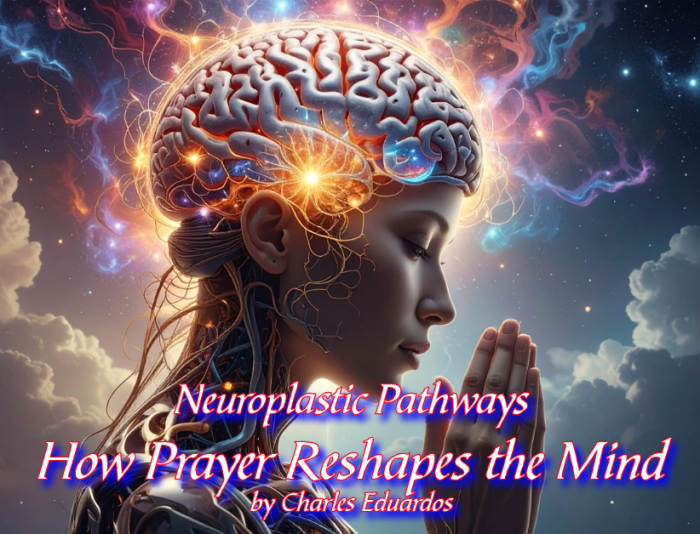
We often think of prayer as a spiritual exercise — a conversation with God, a means of comfort, guidance, and connection. And it absolutely is. And science is beginning to confirm what faith has long known: prayer doesn’t just change our hearts; it changes our brains.
The concept of neuroplasticity — the brain’s ability to reorganize itself by forming new neural connections — reveals that our thoughts, habits, and focus literally shape the architecture of our minds. Prayer, it turns out, is one of the most powerful tools we have to influence that transformation.
The Mind of Christ — Wired into Our Biology
Paul wrote, “Be transformed by the renewing of your mind” (Romans 12:2). That wasn’t just poetic encouragement — it was profound truth. Modern neuroscience now shows that focused, intentional practices like prayer and meditation can rewire the brain, strengthening areas associated with compassion, peace, and emotional regulation, while quieting those linked to fear, anxiety, and reactivity.
When we pray — when we center our thoughts on God’s presence, love, and truth — we are not only communing with the Divine but also retraining our neural networks to align with faith rather than fear. Over time, consistent prayer begins to carve new mental pathways of hope, trust, and resilience.
What Happens When We Pray
During prayer, especially deep, contemplative prayer, brain scans show increased activity in the frontal lobe — the region responsible for focus, decision-making, and empathy — and decreased activity in the amygdala, which triggers stress and fear responses.
In simple terms, prayer literally helps calm the “fight or flight” center and strengthens the “peace and purpose” circuits. That’s why people who maintain a regular prayer life often experience greater emotional stability, clearer thinking, and a stronger sense of well-being.
It’s as though the Creator designed our brains to respond to communion with Him — to thrive when aligned with divine presence.
Faith as Formation
Prayer, then, is not escapism. It’s formation. It’s the rewiring of our inner world so that it reflects heaven’s reality rather than the world’s chaos. When Jesus withdrew to pray, He wasn’t retreating — He was resetting. He was restoring His inner alignment with the Father.
And we can do the same. Each time we pause to pray, to breathe deeply, to release fear and embrace trust, we are training our brains to default toward peace. We are reinforcing the truth that we are not victims of our circumstances but participants in divine transformation.
Creating New Pathways of Peace
The beauty of neuroplasticity is that change is always possible. No matter what patterns of worry, shame, or negativity have been ingrained, prayer offers a way to renew and reshape them. It’s the daily practice of returning — again and again — to God’s presence until His peace becomes our natural state. So when Scripture calls us to “pray without ceasing” (1 Thessalonians 5:17), it’s not just spiritual advice — it’s a neurobiological invitation. The more we practice communion with God, the more our brains, bodies, and lives reflect His love and wisdom.